

Questions for your specialist
It helps to arrive with a short written list of questions, especially if this is your first nephrology appointment or a follow-up after recent tests. A few clear notes can make the discussion easier and help you leave knowing the next step.

Why bring a question list
Specialist appointments can cover a lot in a short time. If you have been referred by your GP or another doctor, there may also be test results, letters and symptoms to discuss. Writing down your questions before the visit can help you remember what matters most to you.
A list does not need to be long. In most cases, five to ten questions are enough. Start with the items that affect your day-to-day life, then add anything you want clarified about follow-up, tests or dialysis planning. If the specialist needs to decide on further care, that decision is made after seeing you and reviewing your history and results.
- Write your questions on paper or in your phone notes.
- Put the most important two or three at the top.
- Leave space to jot down answers during the appointment.
- Bring any referral letter or recent results you were given.
Questions to ask at a first consultation
Your first visit is usually about understanding your kidney health, your medical history and what the next steps may be. This is a good time to ask for plain explanations if a term or test name is unfamiliar. You do not need to know all the medical wording to ask a useful question.
Keep your questions practical. Ask what the specialist is looking at, what information is still needed and when you should come back. Avoid trying to guess a plan from internet searches alone, because the specialist will decide on care after examining your situation properly.
- What is the main reason I was referred to a kidney specialist?
- What do you want to review from my previous notes, scans or blood and urine tests?
- Are there any other tests or reports you need before my next visit?
- What symptoms should I keep a note of between now and my follow-up?
- When should I book my next appointment?
- Should I bring someone with me to future visits if there is a lot to discuss?
Questions for chronic kidney disease follow-up
If you are already being followed for chronic kidney disease, your questions may be more about tracking progress and understanding the plan for monitoring. It can help to bring a short timeline of recent events such as hospital visits, swelling, changes in urination, tiredness or other symptoms you want to mention.
Try to ask questions that help you understand what will be checked over time, rather than asking for treatment rules. The specialist will decide what monitoring, medication review or further steps are needed after the consultation.
- What changes since my last visit are most important for you to know about?
- Which test results are you comparing over time?
- What should I bring to each follow-up appointment?
- How often do you want to see me for review?
- Should my GP receive an update after this visit?
- What signs or symptoms mean I should seek urgent medical attention before my next appointment?
If you think you may forget details, bring a small notebook. A family member can also help take notes, which is often useful when there is a lot of information in one sitting.
Questions about dialysis planning
Dialysis planning discussions can feel like a lot at once. A written question list can keep the conversation organised and help you understand what the planning process involves. This page is only a guide for discussing topics at your appointment. The specialist decides on care and planning after assessing your condition and reviewing your records.
If dialysis has been mentioned, ask about the sequence of decisions, what preparation may be needed and how appointments will be arranged. If you live in Pretoria, Centurion or another nearby area, you may also want to ask practical questions about travel and timing for future visits.
- Why are we discussing dialysis planning at this stage?
- What decisions need to be made now and what can wait until a later review?
- What appointments or assessments are usually part of the planning process?
- How will I know what to do before the next planning visit?
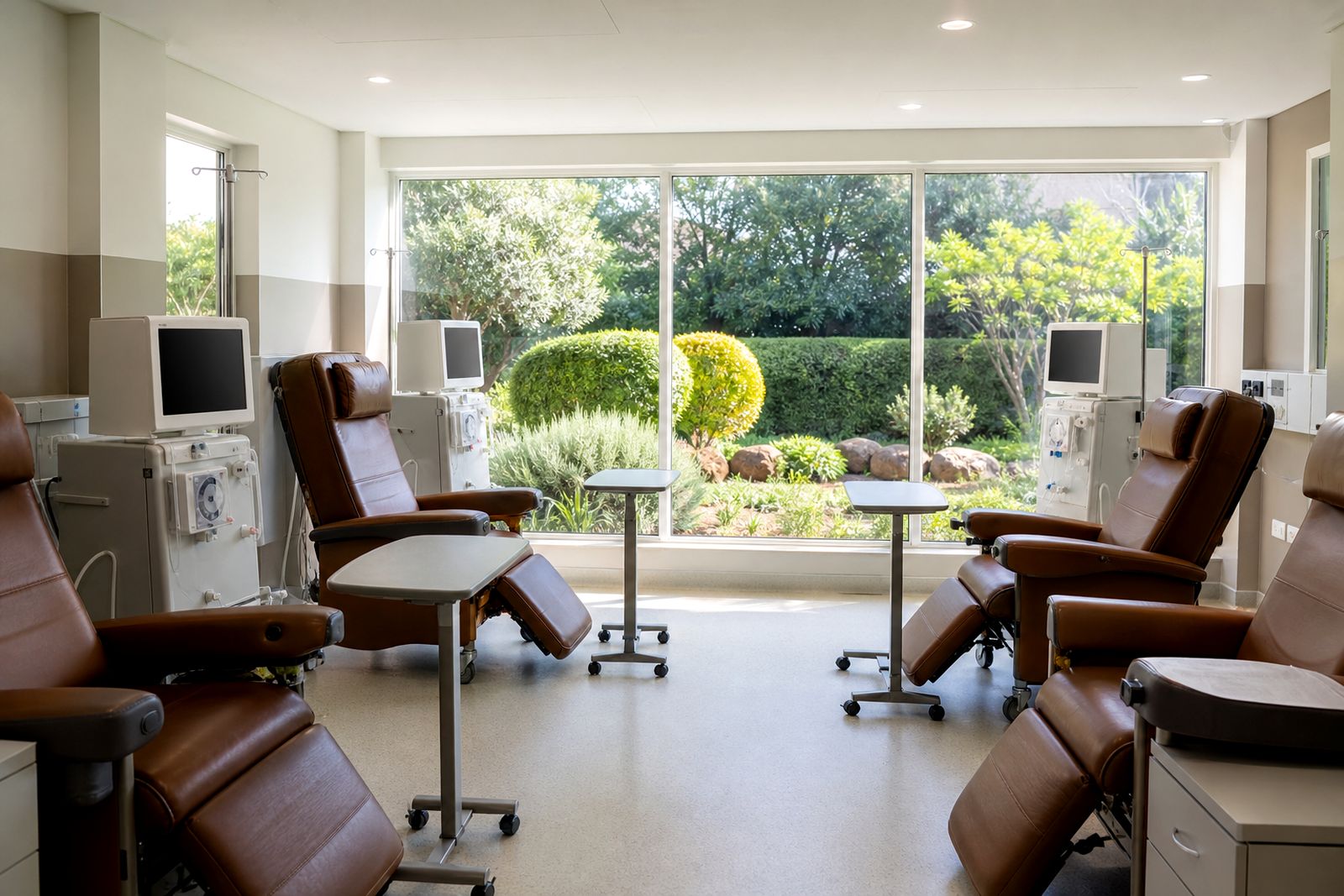
- Can you explain the role of in-centre haemodialysis in my care if it becomes relevant?
- Who should I contact through the practice if I need to change a booking or ask an admin question?
Questions for in-centre haemodialysis discussions
If you are discussing in-centre haemodialysis for practice patients, focus on understanding how the process works at a general level and what your next appointment will cover. This is also the time to ask what documents to bring and whether there are forms to complete before starting any part of the process.
You may also want to ask about practical matters around routine, transport and communication with your referring doctor. Keep in mind that specific medical decisions, scheduling details and suitability are only confirmed by the specialist and clinical team after review.
- What are the next steps if in-centre haemodialysis is being considered for me?
- What paperwork or identification should I bring to future visits?
- Will my referring doctor or GP receive feedback from the practice?
- What should I do if I am unwell before a booked appointment?
- Can I bring a family member to planning discussions?
If you become acutely unwell or think you have an emergency, go to the nearest emergency unit rather than waiting for a routine appointment.
How to keep your questions clear and useful
A good question is short, specific and linked to your own situation. Long lists copied from the internet can make it harder to focus on what matters most in your appointment. Rather bring a shorter list and leave room for the specialist to guide the discussion.
Before you come in, group your questions under simple headings such as symptoms, tests, follow-up and dialysis planning. This makes the conversation easier to follow and helps you check that nothing was missed. If you are coming from Pretoria East, Centurion or further out, a little preparation can save you a return trip because of a forgotten document.
- Put one topic on each line.
- Use your own words, even if they are not medical terms.
- Circle the question you most need answered.
- Bring your medication list and any recent reports if you have them.
- Write down what the next step is before you leave, even if its only one item.
What our Kidney Care customers say
Verified Google reviews
Questions we get asked
How many questions should I bring to my appointment?
A short list is usually best. Five to ten clear questions can help keep the appointment focused while still covering the points that matter most to you.
Can I ask about dialysis even if it has only recently been mentioned?
Yes. It is reasonable to ask general questions about planning and next steps. The specialist will decide what applies to you after reviewing your condition and records.
What if I feel too unwell to wait for my booked visit?
If you think you have an emergency or become acutely unwell, go to the nearest emergency unit. Do not wait for a routine appointment.
Also worth a look



Book a consultation
Send a note through our contact form with your name, whether you have a referral and the kind of appointment you need, and the practice will contact you.
Open the contact form